
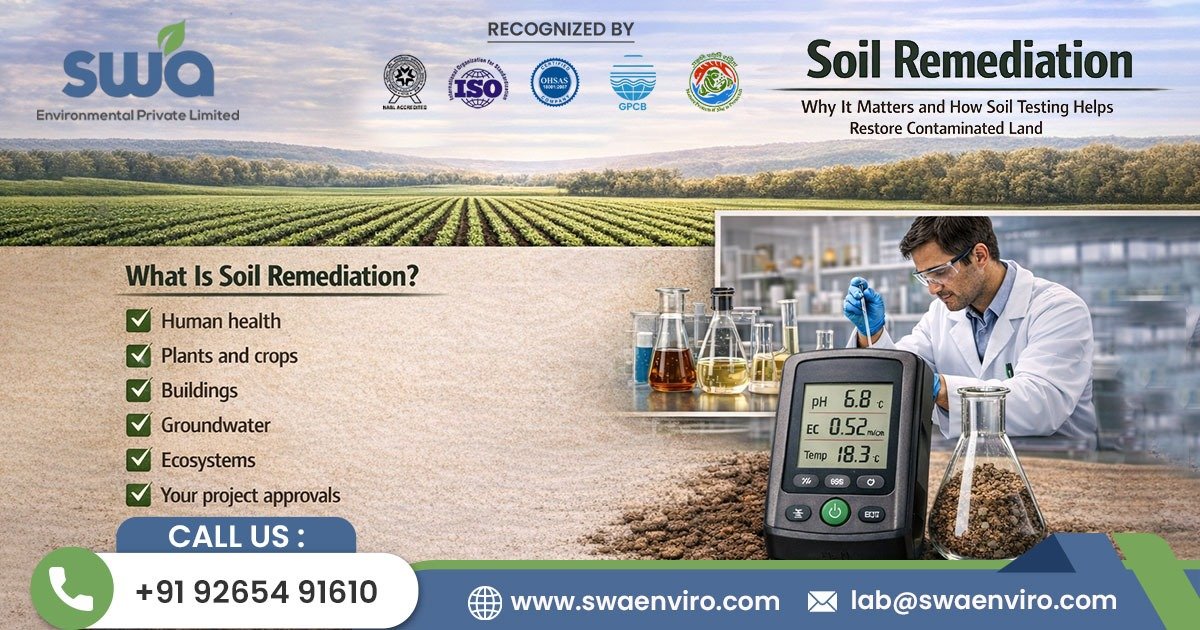
Soil is one of the most valuable natural resources we depend on. It supports agriculture, infrastructure, green spaces, groundwater recharge, and overall environmental safety. However, in India, rapid industrialization, construction activities, unplanned waste disposal, and chemical misuse have significantly increased soil contamination in both urban and rural areas.
This growing problem has made soil remediation a necessity. Whether you are a builder, industry owner, farmer, consultant, or environmental professional, understanding soil remediation is essential for safe land use, regulatory compliance, and long-term sustainability.
Our headquarters are in Ahmedabad, Gujarat, India.
What Is Soil Remediation?
Soil remediation is the process of removing, reducing, or neutralizing contaminants present in soil. These contaminants can harm:
- Human health
- Plants and crops
- Buildings and infrastructure
- Groundwater quality
- Ecosystems
- Project approvals
The goal of soil remediation is to restore land so it becomes safe and usable again—whether for construction, agriculture, industrial use, or environmental compliance.
Why Is Soil Getting Contaminated?
Soil contamination in India occurs due to several reasons:
- Leakage of chemicals, oil, or fuel
- Improper industrial waste disposal
- Dumping of construction debris
- Excessive use of pesticides and fertilizers
- Effluent discharge
- Heavy metal pollution
- Hazardous material storage
- Redevelopment of old industrial sites
One of the biggest challenges is that contaminated soil is often invisible. Without proper testing, it is difficult to detect pollution.
Why Soil Testing Is the Foundation of Soil Remediation
Soil testing is the first and most critical step in any remediation project. It helps determine:
- What contaminants are present
- Their concentration levels
- Depth of contamination
- Impact on groundwater
- Risk to human health and infrastructure
Without accurate testing, choosing the right remediation method becomes guesswork.
Typical Tests Done for Remediation Projects
Professional laboratories usually perform the following tests:
Heavy Metals Analysis
- Lead (Pb), Cadmium (Cd), Chromium (Cr), Arsenic (As), Mercury (Hg)
Hydrocarbon Testing
- TPH (Total Petroleum Hydrocarbons)
- PAH, BTEX, VOCs
Chemical & Soil Properties
- pH, EC, Chlorides, Sulphates
- Organic and inorganic pollutants
Specialized Tests
- Pesticides & agrochemicals
- TCLP (Leachability test)
- Soil fertility and physical parameters
These results guide the selection of the most effective and cost-efficient remediation method.
Common Soil Remediation Techniques Used Today
Modern soil remediation uses different scientific approaches depending on contamination type and severity.
Soil Excavation and Replacement
Removal of contaminated soil and replacement with clean soil. Suitable for shallow and localized contamination.
Soil Washing
A physical or chemical process that separates contaminants from soil particles. Effective for metals and hydrocarbons.
Bioremediation
Uses microorganisms to naturally break down pollutants. It is eco-friendly and cost-effective.
Phytoremediation
Uses plants to absorb contaminants. Ideal for agricultural land and open areas.
Thermal Remediation
Involves heating soil to remove or destroy harmful chemicals. Suitable for VOCs and hydrocarbons.
Stabilization & Solidification
Adds binding agents to lock contaminants in place, preventing their spread. Commonly used for heavy metals.
When Should You Consider Soil Remediation?
Certain warning signs indicate the need for soil testing and remediation:
- Poor or stunted plant growth
- Chemical smell from soil
- Oil patches or unusual soil color
- Reduced crop yield
- Skin or dust irritation
- Previous industrial use of land
- Nearby factories or landfills
- Environmental complaints or audit issues
- Buying or selling industrial property
If any of these apply, soil testing becomes essential.
Why Soil Remediation Is Critical for Construction Projects
Undetected soil contamination can lead to serious construction risks:
- Weak foundation
- Structural damage
- Environmental approval rejection
- Resident complaints
- Groundwater pollution
- Legal penalties
Early soil assessment helps avoid costly delays and future liabilities.
Importance of Soil Remediation in Agriculture
For farmers and agribusinesses, contaminated soil can:
- Reduce crop yield
- Increase chemical dependency
- Damage long-term fertility
- Contaminate the food chain
- Lower market value of produce
Remediation helps restore soil health and improves productivity naturally.
How SWA Enviro Helps with Soil Testing for Remediation
SWA Enviro provides NABL-accredited soil testing services to support accurate remediation decisions.
What We Offer
- Professional soil sampling
- Detailed contamination analysis
- Heavy metal and hydrocarbon testing
- Pesticide residue analysis
- TCLP and environmental risk assessment
- Remediation guidance based on results
- Compliance-ready reports
- Fast turnaround time
Industries We Serve
- Builders and developers
- Industrial facilities
- Environmental consultants
- Farmers
- Government bodies
- Petrochemical and fuel storage sites
- Hazardous waste facilities
Our reports are designed to be clear, reliable, and actionable.
Why Soil Remediation Matters for Your Future
Ignoring soil contamination can result in:
- Groundwater pollution
- Structural failures
- Crop damage
- Legal penalties
- High future remediation costs
- Loss of land value
- Health hazards
Timely testing helps prevent long-term risks.
Need Soil Testing for Soil Remediation?
If you are planning redevelopment, agriculture, industrial expansion, or environmental compliance, soil testing is essential.
SWA Enviro Solutions offers complete soil analysis and expert guidance to support remediation projects.
Final Message
Soil remediation is not just a scientific process—it is an investment in land safety, productivity, and long-term value. And it always begins with one step: Soil Testing.
We provide soil remediation services across Gujarat, including Ahmedabad, Surat, Vadodara, Rajkot, Bhavnagar, Jamnagar, Anand, Gandhinagar, Bharuch, Morbi, Vapi, Valsad, Junagadh, Nadiad, Mehsana, Porbandar, Godhra, Navsari, Surendranagar, Patan, Amreli, Palanpur, Modasa, Dahod, Gandhidham, Bhuj, Ankleshwar, Kalol, Sanand, Halol, Kadi, Khambhat, Jetpur, Kutch, Mundra, Rajpipla, Dwarka, Dholka, Bhachau, Chotila, Dhandhuka, Umargam, Padra, Jhagadia, Savli, Sachin, Palghar, Vallabh Vidyanagar, Mandvi, Halvad, Balasinor, Nandesari, Pardi, Karamsad, and many more.
Contact Information
Get in Touch
- Phone: +91 9227988980
- Email: lab@swaenviro.com
- Website: www.swaenviro.com
Accurate testing. Reliable reports. Environmental compliance made easy.