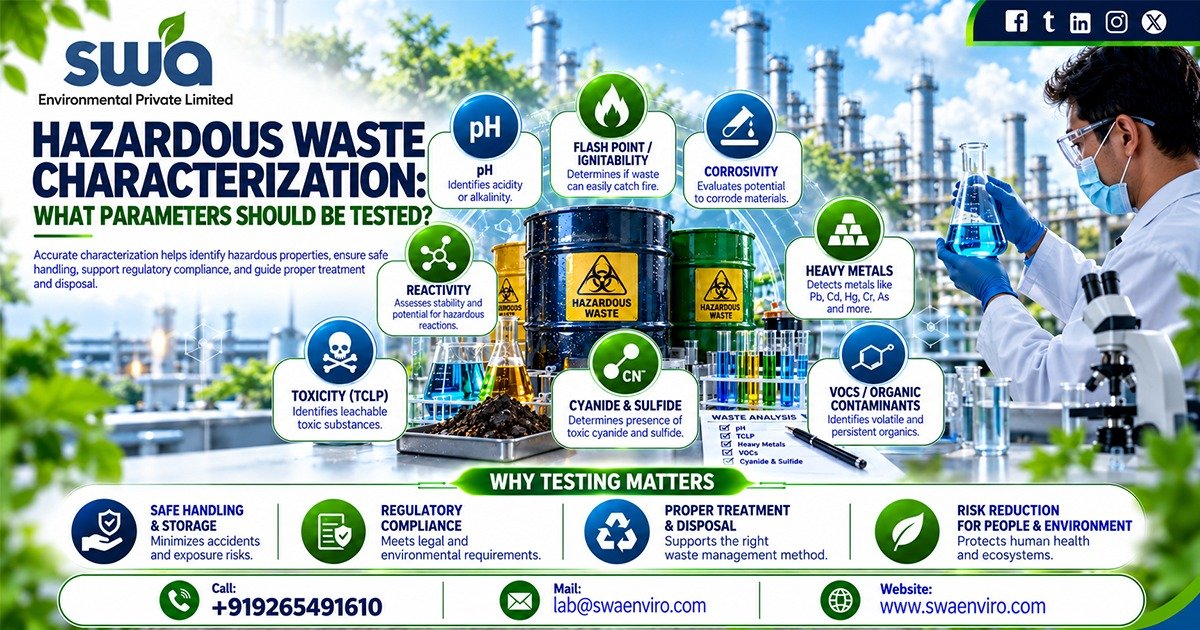
Hazardous waste characterization helps industries identify the composition, properties, risks, and disposal requirements of generated waste.
SWA Environmental Private Limited supports industries with systematic hazardous waste assessment to determine suitable treatment, storage, transportation, and disposal methods. Our registered office is located in Ahmedabad, Gujarat, India.
What Is Hazardous Waste Characterization?
Hazardous waste characterization is the process of testing waste samples to identify physical, chemical, and hazardous properties.
The results help industries understand whether waste requires specialized handling under applicable environmental requirements.
Parameters Tested for Hazardous Waste Characterization
- Physical Characteristics: Colour, appearance, odour, moisture content, density, viscosity, and physical state.
- pH: Determines whether the waste is acidic, neutral, or alkaline and supports safe handling decisions.
- Flash Point: Helps identify wastes that may present fire or ignition risks.
- Heavy Metals: Testing may include lead, chromium, cadmium, mercury, arsenic, nickel, copper, zinc, and other relevant metals.
- Chemical Composition: Identifies organic and inorganic constituents that influence treatment and disposal requirements.
- Toxicity: Assesses the presence and concentration of hazardous substances that may pose environmental or human-health risks.
- Organic Parameters: Depending on the waste source, testing may include hydrocarbons, phenols, solvents, pesticides, and other organic compounds.
- Chlorides and Sulphates: Helps evaluate inorganic content and potential impacts during treatment or disposal.
- Total Dissolved Solids (TDS): Indicates the concentration of dissolved substances present in liquid or leachable waste.
- COD and BOD: Relevant for wastewater, sludge, and other wastes containing biodegradable or oxidizable organic matter.
- Calorific Value: Useful for evaluating combustible wastes and potential suitability for co-processing or energy recovery.
- Ignitability, Corrosivity, Reactivity and Toxicity: These properties help determine the hazardous nature and appropriate management route.
Why Is Hazardous Waste Characterization Important?
- Identifies the hazardous properties and chemical composition of waste.
- Supports appropriate waste classification and segregation.
- Helps select suitable treatment and disposal methods.
- Reduces risks during storage, transportation, and handling.
- Supports environmental compliance and responsible waste management.
- Helps industries maintain reliable waste analysis and documentation.
- Prevents unsuitable disposal practices that can affect soil, water, air, and surrounding ecosystems.
How SWA Environmental Private Limited Supports Waste Characterization
SWA Environmental Private Limited can help industries approach hazardous waste characterization systematically by considering:
- Waste generation source and industrial process
- Representative sample collection
- Relevant physical and chemical parameters
- Laboratory testing requirements
- Interpretation of analytical results
- Waste treatment and disposal considerations
- Environmental compliance requirements
The exact testing parameters should be selected according to the waste type, generation process, composition, and intended management or disposal route rather than applying the same test panel to every waste stream.
Industries That May Require Hazardous Waste Characterization
- Chemical manufacturing industries
- Pharmaceutical companies
- Petrochemical and petroleum industries
- Engineering and metal-processing units
- Paint and coating industries
- Textile and dyeing industries
- Automotive and ancillary industries
- Oil and lubricant processing units
- Industrial wastewater treatment facilities
- Manufacturing and processing plants
Short FAQs
Q1: What is hazardous waste characterization?
A1: It is the testing and evaluation of waste to identify its composition, hazardous properties, and suitable management requirements.
Q2: Which parameters are commonly tested?
A2: Common parameters include pH, moisture, heavy metals, flash point, chemical composition, COD, BOD, TDS, and toxicity-related characteristics.
Q3: Why is pH tested in hazardous waste?
A3: pH indicates the acidic or alkaline nature of waste and helps determine appropriate handling and treatment requirements.
Q4: Are heavy metals tested in hazardous waste?
A4: Yes. Metals such as lead, mercury, chromium, cadmium, arsenic, nickel, copper, and zinc may be tested when relevant.
Q5: Is every hazardous waste tested for the same parameters?
A5: No. The testing panel depends on the waste source, composition, characteristics, and intended treatment or disposal method.
Q6: Who can help with hazardous waste characterization?
A6: SWA Environmental Private Limited can support industries in assessing relevant waste characterization requirements and environmental management needs.
Characterize Hazardous Waste Accurately
Characterize hazardous waste accurately with SWA Environmental Private Limited for safer handling, compliance, treatment, and responsible disposal decisions.
Website: www.swaenviro.com
Phone: +91 92654 91610
Email: lab@swaenviro.com