SWA Environmental Private Limited is a provider of Waste-to-Energy solutions in India: turning waste into an energy resource across the country.
Our registered office, manufacturing facility, and advanced laboratories are located in Ahmedabad and Jaipur, India.
A Growing Shift Toward Circular Economy and Scientific Waste Management
🌍 Introduction
India’s rapid urbanization and industrial growth have led to a significant increase in waste generation. While this presents environmental challenges, it also opens up an opportunity to transform waste into a valuable resource through Waste-to-Energy (WTE) systems.
🚨 The Waste Challenge in India
India generates large volumes of waste daily, including:
- Municipal solid waste
- Industrial waste
- Agricultural residue
- Plastic waste
- Organic waste
- Sewage sludge
Key problems caused by improper disposal:
- Land pollution
- Groundwater contamination
- Methane emissions from landfills
- Air pollution from open burning
- Public health risks
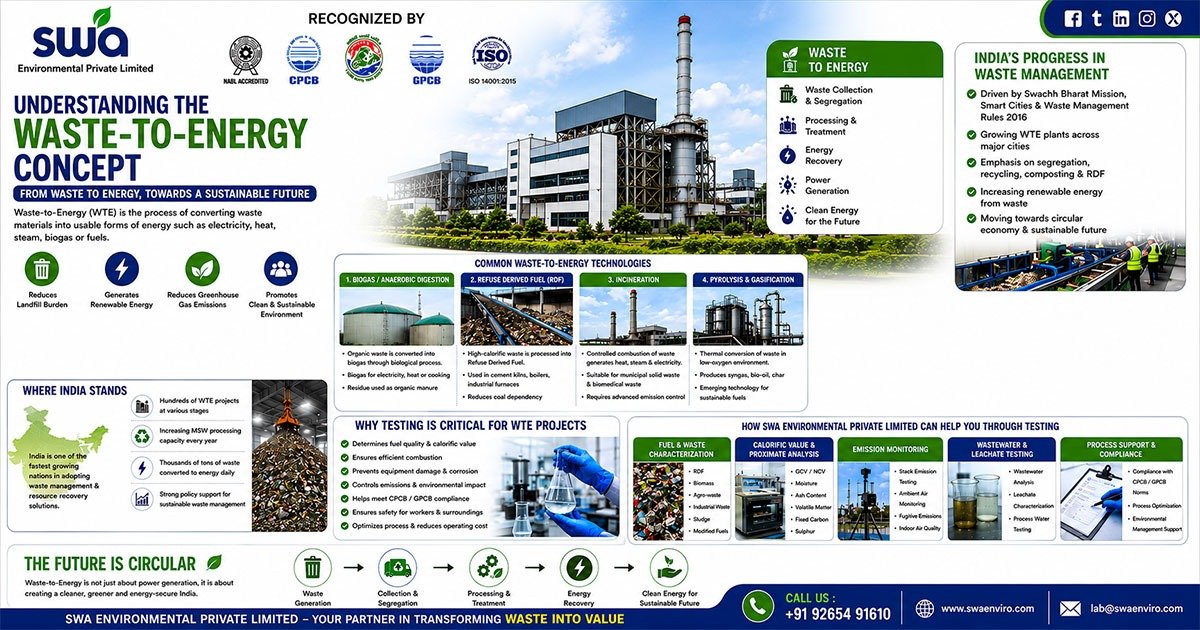
🔥 What is Waste-to-Energy (WTE)?
Waste-to-Energy is the process of converting waste materials into usable energy forms.
Energy outputs include:
- Electricity
- Heat
- Steam
- Biogas
- Refuse Derived Fuel (RDF)
- Biofuels
Core objective:
- Reduce landfill dependency
- Recover usable energy from waste
- Promote circular economy principles
⚙️ Major Waste-to-Energy Technologies
1. ♻️ Biogas / Anaerobic Digestion
- Organic waste is broken down biologically
- Produces methane-rich biogas and slurry
- Applications:
- Cooking fuel
- Electricity generation
- Steam production
2. 🔥 Refuse Derived Fuel (RDF)
- Converts high-calorific waste into fuel
- Used in:
- Cement industries
- Boilers
- Industrial furnaces
3. 🏭 Incineration
- Controlled burning of waste
- Generates heat, steam, and electricity
- Commonly used for:
- Municipal solid waste
- Biomedical waste
4. ⚡ Pyrolysis & Gasification
- Advanced thermal conversion technologies
- Produces:
- Syngas
- Bio-oil
- Char
- Considered future-ready clean fuel solutions
Waste-to-Energy in India: Current Progress
India is steadily advancing in waste management through initiatives such as:
- Swachh Bharat Mission
- Smart Cities Mission
- Solid Waste Management Rules (2016)
- Circular economy programs
Key developments in cities:
- Waste segregation systems
- Composting units
- RDF production facilities
- Biogas plants
- WTE power plants
🔬 Role of Environmental Testing in WTE Systems
A successful WTE ecosystem depends on accurate waste analysis and monitoring.
Key testing requirements:
- Fuel quality assessment
- Emission monitoring
- Waste characterization
- Environmental compliance
🧪 Contribution of SWA Environmental Private Limited
SWA Environmental Private Limited plays a key role in supporting India’s transition toward scientific waste management.
🔬 Fuel & Waste Characterization
- RDF analysis
- Biomass briquettes testing
- Agro-waste fuel evaluation
- Industrial waste profiling
- Sludge and modified fuel testing
🔥 Calorific Value Analysis
- Gross Calorific Value (GCV)
- Net Calorific Value (NCV)
- Moisture content
- Ash content
- Volatile matter
- Fixed carbon
🌫️ Environmental Monitoring
- Stack emission testing
- Ambient air quality monitoring
- Fugitive emission studies
- Indoor air quality assessment
💧 Wastewater & Leachate Testing
- Landfill leachate analysis
- Compost plant wastewater testing
- Industrial effluent evaluation
⚙️ Process Optimization & Compliance Support
- Improve combustion efficiency
- Optimize fuel usage
- Ensure CPCB/GPCB compliance
- Reduce environmental risks
- Support sustainable operations
🌱 The Future of Waste Management in India
India is transitioning from traditional waste disposal to resource recovery systems.
Future focus areas:
- Circular economy models
- Renewable energy from waste
- Smart waste segregation systems
- Scientific waste processing
Expected outcomes:
- Cleaner cities
- Reduced landfill dependency
- Lower carbon emissions
- Increased renewable energy generation
🚀 Conclusion
Waste-to-Energy is more than a waste management solution—it is a pathway to sustainable development.
When implemented effectively, it can:
- Generate clean energy
- Reduce pollution
- Recover valuable resources
- Support climate goals
- Enable circular economy growth
With scientific support and environmental expertise from organizations like SWA Environmental Private Limited, India can accelerate its
transition toward a cleaner, more sustainable future.
The future of waste is not disposal—it is transformation into value. ♻️
Contact
- Visit: www.swaenviro.com
- Phone: +91 9227988980
- Email: lab@swaenviro.com